



Direct Push: What It Is, How It Works, Depth and Limitations

Direct push is one of the most widely used techniques in contaminated site investigation. Instead of drilling and removing soil, the rig drives rods into the ground and collects samples without producing large volumes of waste. This guide explains how it works, where it performs best and where its limits are.
What direct push is
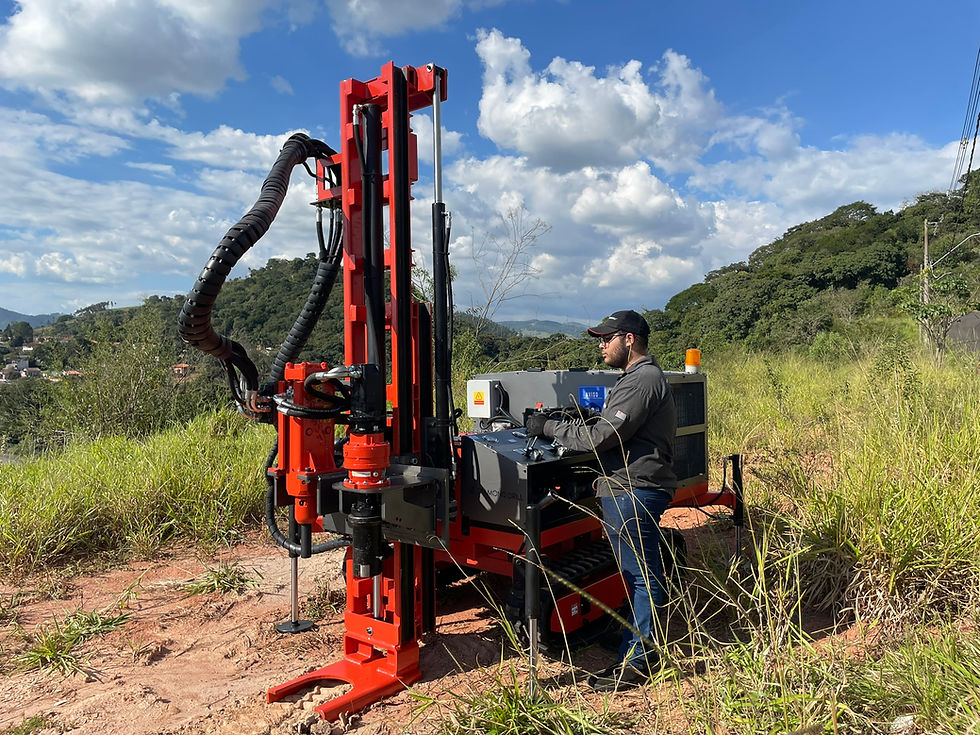
It is a drilling method in which small-diameter rods are driven into the ground by pressure and percussion, without rotation. A sampler or a logging tool sits at the tip of the string, and the rig can be mounted on tracks or on a vehicle.
How liner sampling works
A plastic tube (liner) sits inside the sampler. As the rod advances, soil enters the liner continuously. When the string is pulled out, the liner comes up with the sample preserved, so it can be opened, logged and photographed, or sent to the laboratory.
Dual tube: an outer rod with an inner sampler, which lowers the risk of cross-contamination.
Single tube: a single string, simpler and faster in soils that do not collapse into the borehole.
Where direct push performs best
Confirmatory and detailed investigation of contaminated sites.
Plume delineation, with samples at several depths.
Groundwater and soil gas sampling.
Restricted-access sites, such as fuel stations and industrial plants in operation.
Limitations of the method
Very dense soils or gravel can prevent driving.
Building large-diameter wells is usually better done with hollow stem auger.
Depth depends on the rig's power: check the real direct push depth on the datasheet, not just the depth in other methods.
Direct push or hollow stem auger?
The two methods complement each other. See the full comparison in Direct Push vs Hollow Stem Auger (HSA): Which Environmental Drill Rig to Buy?
How to choose the rig
Compare power, real direct push depth, compatibility of the tooling with market liners and samplers, weight and mobility. The SAM 400, from Diamond Drill, does direct push up to 40 m and also hollow stem auger up to 40 m, with an 89 CV diesel engine and a remote control included. See the SAM 400 page.


Comments