



Groundwater Monitoring Well Construction: Steps and Common Mistakes

A monitoring well is where groundwater is measured and sampled over time. If the well is poorly built, the sample no longer represents the aquifer and the data loses its value. Recognized practices such as ASTM D5092 guide design and installation. Here are the steps and the most common mistakes.
Construction steps
Drilling. The borehole is opened with hollow stem auger, direct push or another method suited to the soil. The diameter must fit the casing and the filter pack.
Casing and screen. Plain casing sits above the water and the slotted section (screen) sits at the depth to be monitored.
Filter pack. Selected sand fills the space between the screen and the borehole wall, keeping fines out.
Seal. A layer of bentonite above the filter pack isolates the monitored interval.
Grouting. The remaining annular space is filled to prevent surface water from entering.
Surface completion. A flush-mount box or protective casing, with a cap and identification.
Development. The well is pumped until the water runs clear, to remove fines and establish a connection with the aquifer.
Materials
Casing and screens in a material compatible with the contaminants being investigated.
Filter pack sand with a grain size matched to the screen slot opening.
Bentonite for the seal and cement grout for the rest of the annular space.
Most common mistakes
Screen at the wrong depth, which measures the wrong layer.
Insufficient seal, which allows mixing between layers.
Poorly sized filter pack, which lets fines through and clogs the well.
No development, which leaves the well turbid and compromises samples.
Cross-contamination from equipment that was not decontaminated between wells.
No identification or survey of the well.
The role of the equipment
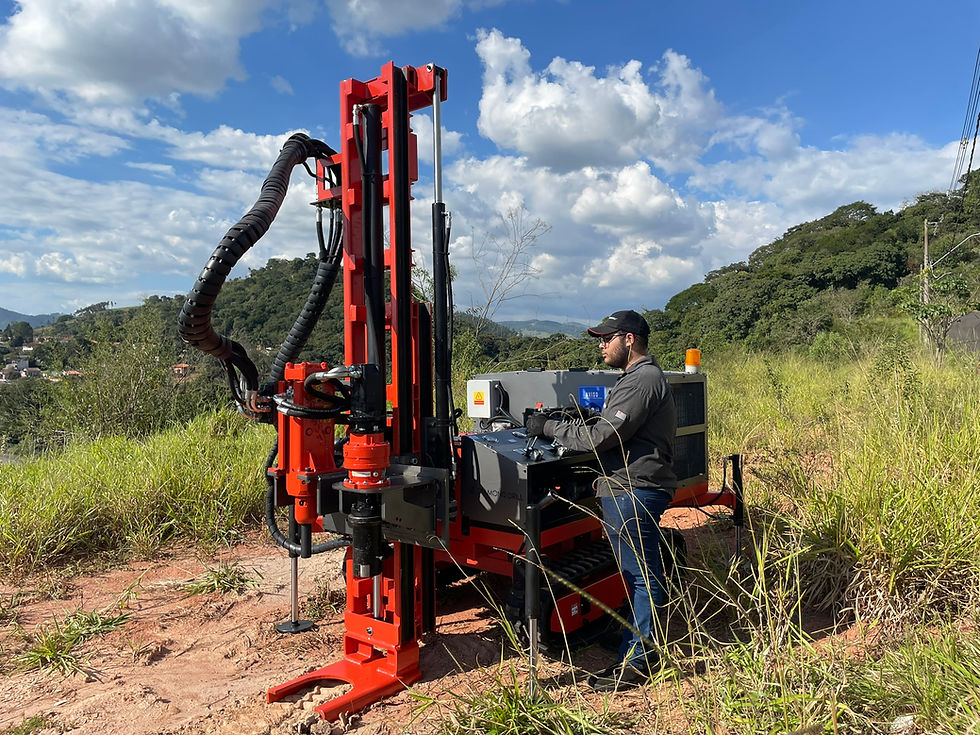
Well quality starts with the drilling. A hollow stem auger of the right diameter keeps the borehole stable, and direct push allows smaller-diameter wells in favorable soils. The SAM 400, from Diamond Drill, works with hollow stem auger (7.1/2" x 4") and direct push up to 40 m. See the SAM 400 page.
Always confirm the current rules and the requirements of the environmental authority in your country before carrying out the work.


Comments