



Environmental Drilling Step by Step: Direct Push, Hollow Stem Auger, and NBR 15492

Investigating contaminated sites requires reliable soil and groundwater samples. The drilling method you choose affects cost, schedule, and sample quality. Here are the main methods and how to choose between them.
The role of NBR 15492
The Brazilian standard NBR 15492 covers reconnaissance drilling for environmental quality purposes and guides the procedures for investigating soil and groundwater. Check the current version and the requirements of your state's environmental agency.
Direct push
Direct push drives the sampling tool into the ground without rotation, using hydraulic force and percussion. It is fast, generates little waste, and causes minimal soil disturbance, which favors samples for chemical analysis. It works best in softer soils and at shallower depths.
Hollow Stem Auger (HSA)
The Hollow Stem Auger drills with a hollow shaft that keeps the borehole open. It is the most widely used method for installing monitoring wells, because it allows the casing and screen to be lowered without the hole collapsing.
Solid stem auger
The solid stem auger is used for shallow drilling and for collecting soil samples in materials that do not collapse.
How to choose
Objective | Recommended method |
|---|---|
Fast, minimally disturbed soil samples | Direct push |
Monitoring well installation | Hollow Stem Auger (HSA) |
Shallow drilling in cohesive soil | Solid stem auger |
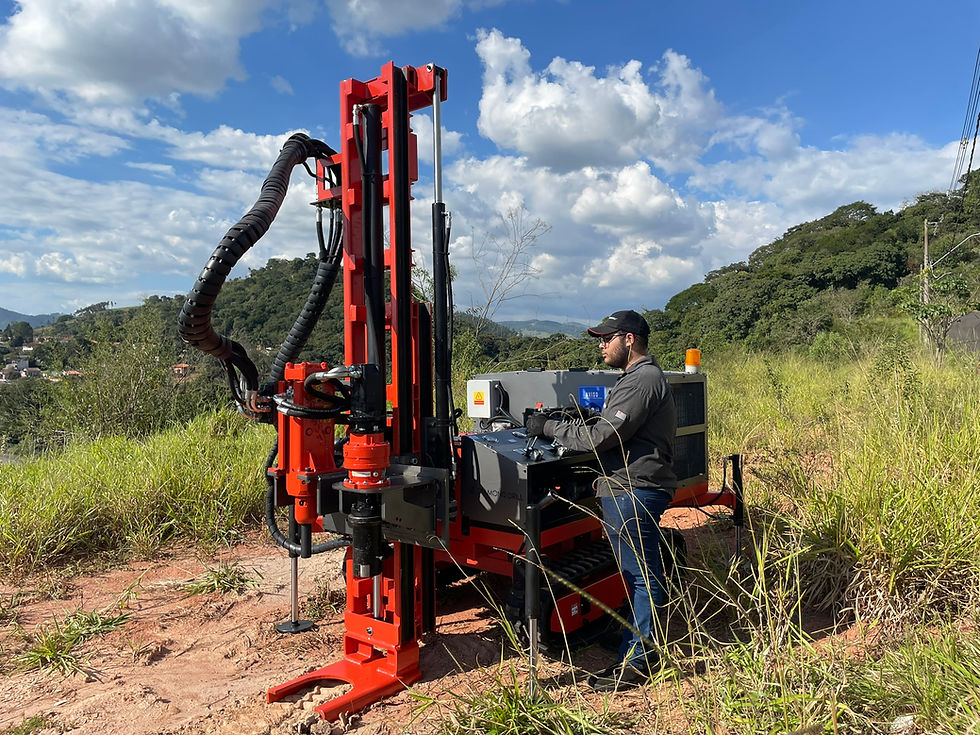
In practice: the SAM 150DT drilling rig
The SAM 150DT drills with a 6" x 3" hollow stem auger down to 20 m and with a 6" solid stem auger down to 25 m, in addition to direct push sampling
Need a rig for environmental investigation?
Contact Diamond Drill and request a quote for the SAM line.


Comments